
Article: Cold plunge science: what the research actually says about recovery
Cold plunge science: what the research actually says about recovery
Cold plunging has gone from a niche athletic habit to something you see in every wellness influencer's content. That kind of popularity tends to produce a lot of noise. People either swear by it or dismiss it entirely.
The actual science is more interesting than either camp suggests. Here's what the research genuinely shows.
What's happening to your body when you get in
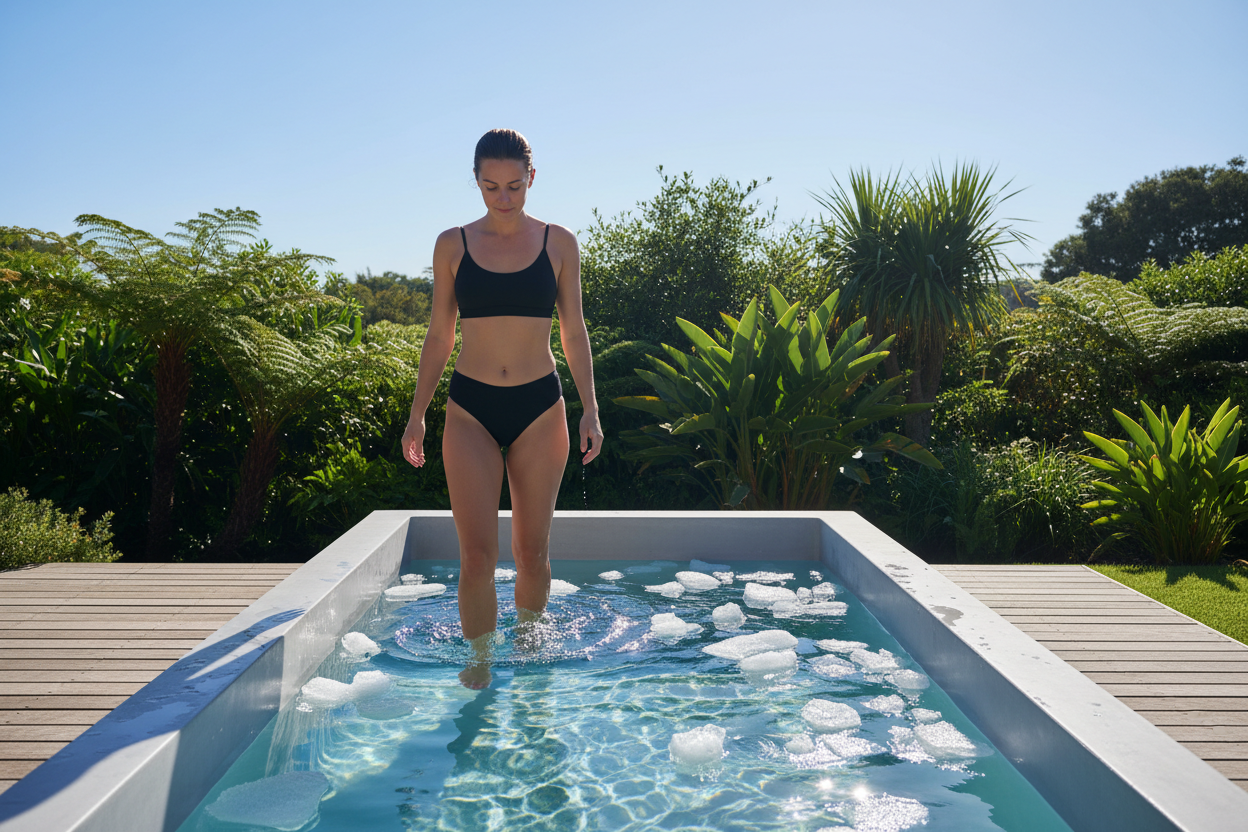
The moment you submerge in water at or below 15°C (59°F), your body treats it as a stressor. Blood vessels constrict. Heart rate spikes. Your nervous system activates. That first shock of cold is part of the experience. It feels intense at first, and most people find they settle into it with practice.
With repeated exposure, the body adapts to that stress. And it's in that adaptation where most of the documented benefits live.
Routine: why people keep coming back Many people who train hard simply enjoy making a cold plunge a regular part of their routine after a session. Plenty of people simply enjoy the feel of cold water after a hard session. Some like the ritual, others like the quiet focus it takes to get in. There's an important nuance though." (Mayo Clinic Health System, 2024)
There's an important nuance though. Many people who train like to plan their cold plunge sessions around their workouts. Some prefer to plunge right away, while others like to wait a bit after lifting before getting in. There is no single right approach here. Try a few routines, see what feels best for you, and build your plunge into a schedule you enjoy (NPR Health, 2023)
The practical takeaway: if you're trying to build muscle, don't cold plunge right after lifting. Save it for rest days or after conditioning sessions instead.
What it does to your cells
A University of Ottawa study had ten healthy young men undergo cold water immersion at 14°C for one hour across seven consecutive days. Blood samples showed a significant improvement in autophagic function — the cellular recycling process that gets rid of damaged cells and promotes resilience under stress.
Lead researcher Kelli King described the finding plainly: "repeated cold exposure significantly improves autophagic function, a critical cellular protective mechanism." (University of Ottawa, Human and Environmental Physiology Research Lab)
In plain terms: your cells get better at handling stress. That's not nothing.
The immune system question
One of the most cited studies in this area assigned 3,018 office workers to a cold shower protocol for 60 days. Workers who added cold water to their morning routine took 29% fewer sick days and reported higher energy levels than the control group. (Mayo Clinic Press, 2024)
The researchers are careful to note they don't fully understand the mechanism, and that cold exposure alone may not be the only variable at play. More rigorous research is needed before anyone should make strong immune claims.
Temperature and time — the variables that matter
Most research uses water between 7°C and 15°C (45–59°F), with sessions lasting 30 seconds to a few minutes. The practical sweet spot for recovery is 3 to 5 minutes at 10–15°C.
Prolonged sessions in near-freezing water carry real risks — nerve damage, hypothermia, cardiovascular stress. The evidence supports controlled, timed sessions. Not endurance contests.
Worth it?
For serious athletes and high-performers, yes — with proper protocol. The recovery, stress regulation, and cellular adaptation benefits are real and increasingly well-documented. A dedicated cold plunge gives you control over temperature and duration that an ice bath or cold shower doesn't.
The key is using it intelligently — not just because it's uncomfortable.
Sources: PLOS ONE — Effects of cold-water immersion on health and wellbeing: A systematic review (January 2025). Mayo Clinic Health System — Cold-water plunging health benefits (2024). Mayo Clinic Press — The Science Behind Ice Baths for Recovery (2024). University of Ottawa — Cold plunges actually change your cells. NPR Health Shots — What are the health benefits of a cold plunge? (2023).