
Why serious people are leaving commercial gyms for good
Something has shifted in the way high-performers think about training. The commercial gym was the default for decades. You paid a monthly fee, drove there, waited for equipment, trained around strangers, and drove home. It was the only option, so nobody questioned it.
That's changing fast. And the numbers back it up.
The global home gym equipment market was valued at $12.4 billion in 2025 and is projected to reach $19.6 billion by 2035, according to Future Market Insights. That's not a pandemic blip. That's a structural shift in the way serious people think about where they train. The people driving that growth aren't casual gym-goers looking for a treadmill to collect dust in the garage. They're entrepreneurs, executives, and athletes who have applied the same standard to their training environment that they apply to everything else in their life: if it's not working, fix it.
The real cost of a commercial gym nobody talks about Most people calculate gym membership as a monthly fee, maybe $100, or $200 for a premium facility. That number feels manageable. But it's not the real cost.
The real cost includes the commute. For someone training five days a week with a 20-minute commute each way, that's over 85 hours per year spent travelling to and from a gym. That's two full working weeks, gone. For people who treat time as their most valuable asset, that number is not a minor inconvenience. It's a deal-breaker.
Add the time spent waiting for equipment during peak hours, the mental energy of training in a crowded environment, and the accumulated frustration of a space you have zero control over, and the true cost of a commercial gym is far higher than the invoice suggests.
The equipment gap no longer exists
The main argument against training at home used to be equipment quality. Commercial gyms had better machines, heavier weight options, and more variety than anything a person could put in their house. That argument is no longer valid.
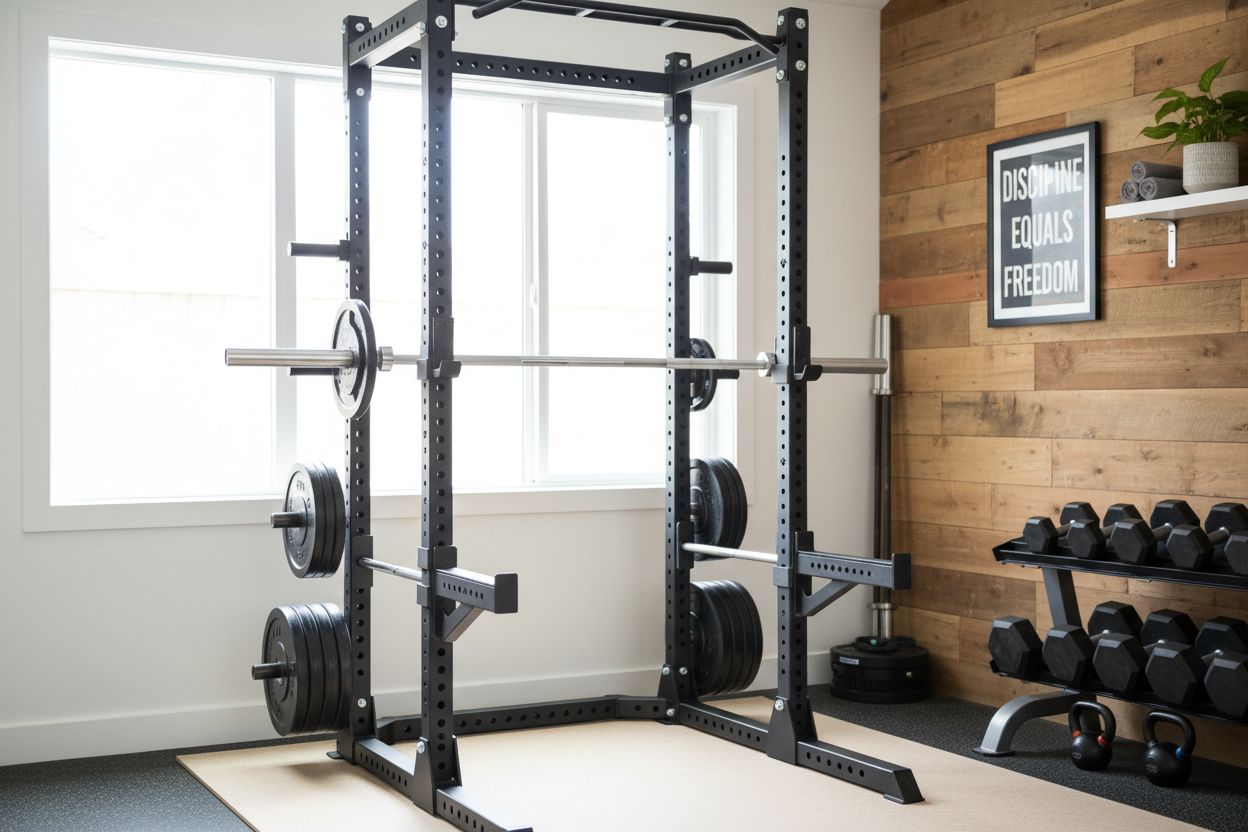
The same manufacturers supplying elite training facilities and professional sports teams — Rogue, Life Fitness, Technogym, Assault — now sell directly to private buyers. A power rack, cable machine, commercial-grade treadmill, and recovery setup in a dedicated home space can match or outperform the equipment in most commercial gyms. Rogue Fitness even launched modular rack systems in 2024 that reduced assembly time by 35% compared to earlier designs, making professional-grade equipment more accessible for home installation than ever before.
The difference is no longer what equipment is available. The difference is the environment it sits in.
What owning your training environment actually means
The obvious benefit of a private gym is convenience. But the deeper value is harder to quantify: complete ownership of your training conditions.
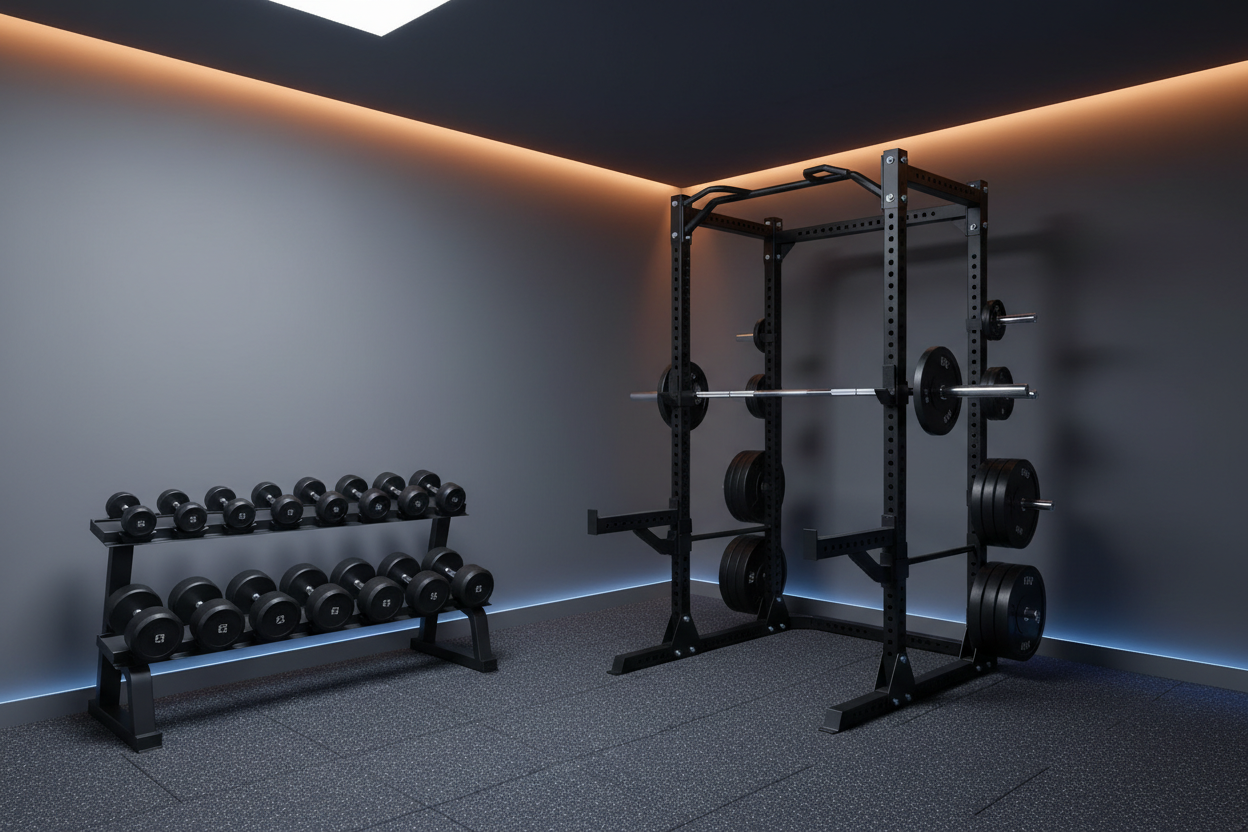
No waiting for the squat rack. No adjusting your program around what's available. No crowds, no noise, no social dynamics of a public gym. Your space is configured for your program, available at any hour, and built around how you actually train — not around what 300 other members need from the same facility.
For people who treat training as a performance input — not a leisure activity — that level of control is not a luxury. It's a competitive advantage.
Recovery is half the equation — and commercial gyms can't provide it
The shift toward private training environments reflects a broader understanding of what serious training requires. Recovery isn't optional at the highest level — it's where adaptation happens. And recovery tools are where commercial gyms simply cannot compete.
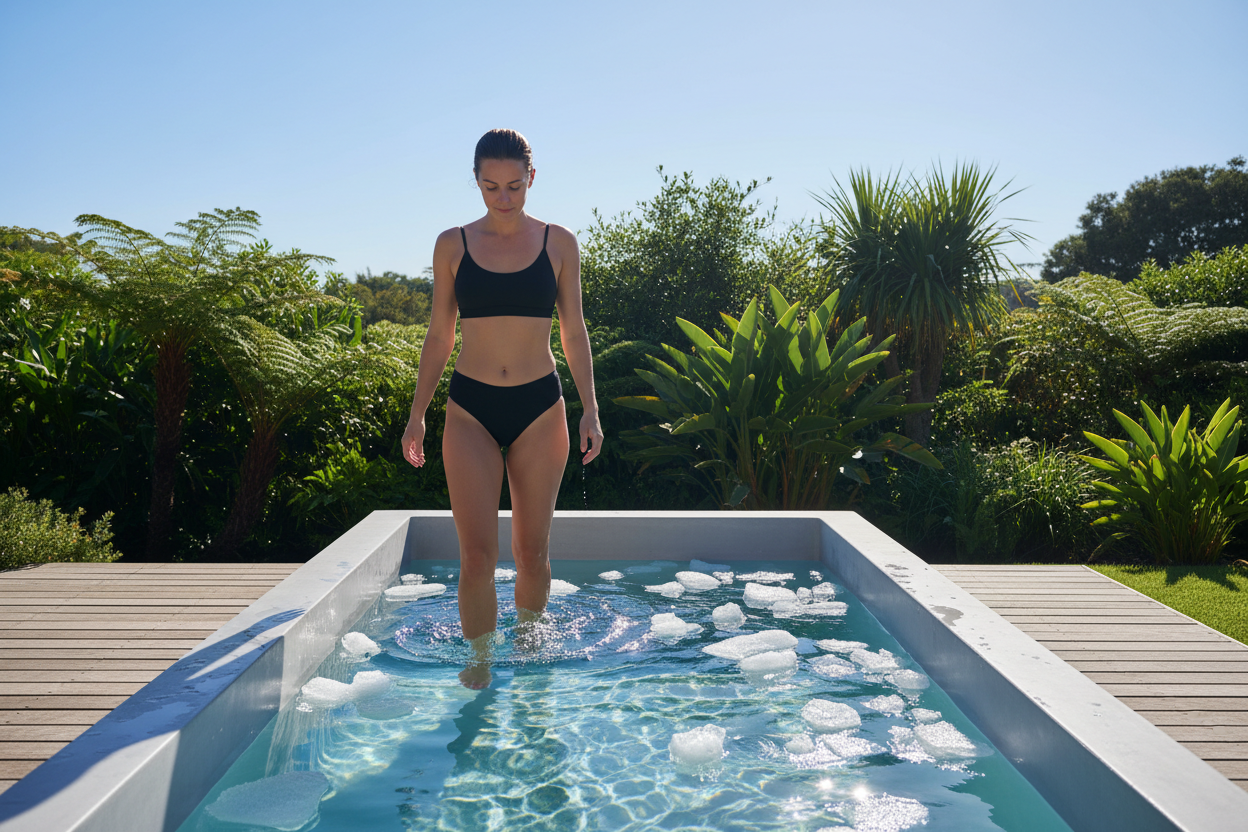
Cold water immersion has been used by elite athletes for decades. A 2025 human crossover study published in Scientific Reports found that cold water immersion at 8–12°C increased circulating norepinephrine by up to 144% — a hormonal response linked to alertness, mood, and recovery. A systematic review published in PLOS One, analyzing data from 3,177 participants, found that regular cold water immersion was associated with reductions in stress, fewer sick days, and improvements in sleep quality.
Infrared sauna use has shown similar promise. Regular sauna use has been linked to increased plasma volume and improved cardiovascular markers — benefits that compound over time when integrated into a consistent training and recovery routine.
A private home gym with cold plunge and infrared sauna capability delivers what no commercial gym membership can: a fully integrated training and recovery environment, available every day, on your schedule.
The investment case is stronger than most people realize
A well-built home gym in the $15,000 to $30,000 range — covering strength equipment, cardio, and recovery — pays for itself within three to five years compared to a premium commercial gym membership. That calculation doesn't account for the time savings, the performance advantages, or the long-term asset value of owning the equipment outright.
Quality strength equipment doesn't depreciate meaningfully. A commercial-grade power rack bought today will perform identically in twenty years. For homeowners who think about their property as an investment, a dedicated training space adds tangible value — to the home and to the quality of daily life.
Who is making this move
The people building serious home gyms are not fitness hobbyists looking for a convenience upgrade. They are people for whom training is a professional-level commitment — and who have decided that a commercial gym is no longer the right environment for that work.
They are not leaving because commercial gyms got worse. They are leaving because their standards got higher. And once you've trained in a space that's entirely yours — built around your goals, your schedule, and your standards — going back is not something most people seriously consider.
The commercial gym had a long run. For the people who train seriously, it's over.
Sources: Future Market Insights — Home Gym Equipment Market Report 2025; Precedence Research — At-Home Fitness Equipment Market 2025; Scientific Reports (2025) — Cold Water Immersion and Norepinephrine Response; PLOS One (2025) — Effects of Cold-Water Immersion on Health and Wellbeing: A Systematic Review and Meta-Analysis; Rogue Fitness Product Release 2024.